Key points
- Georgia’s democratic backslide alarms EU
- Georgia’s shift away from democratic norms has raised concerns in the EU, which now considers the country a candidate for membership ‘in name only.’ The EU ambassador in Tbilisi stated that Georgia is no longer on the path to joining the bloc.
- Ruling party accused of authoritarianism
- The ruling Georgian Dream party is accused of building an authoritarian regime by jailing opposition leaders and planning to ban main opposition groups. Former officials and diplomats express concern over the loss of political consensus on Georgia’s Western alignment.
- Economic ties shift towards Russia, China
- Georgia’s economic orientation is shifting towards Russia and China, with increased oil imports from Russia and a stalled Western-led port project now contracted to a Chinese company. This shift is seen as a missed opportunity for the West to strengthen ties with Georgia.
Just over a year ago, a diverse array of opposition coalitions jockeyed for votes in Georgia’s parliament, with four of them winning seats. Today, of their eight main leaders, all but one are in jail, in exile or facing criminal charges. The ruling party aims to ban the three main opposition groups outright.
The slide into one-party rule has shocked many in the tiny South Caucasus country of 3.7 million. In the years following the collapse of the Soviet Union, Georgia appeared a burgeoning democracy, on the fast track to joining the EU and escaping Russia’s orbit.
But now it is further from the West than at almost any time in its post-Soviet history, according to an assessment from Brussels, which described its democratic institutions as hobbled and its courts under the thumb of the state.
This month, the EU declared in a report that Georgia was now a candidate for membership “in name only”. The EU ambassador in Tbilisi said Georgia was no longer on the trajectory to join the bloc at all.
Senior veterans of Georgian politics and diplomacy who spoke to Reuters about the events of the past few months said it appears as though Georgia is close to a line, beyond which it will be hard for democracy to recover.
“We are now five minutes away from one-party dictatorship,” said Sergi Kapanadze, a former deputy foreign minister and deputy parliamentary speaker until 2020.
‘DEMOCRATISATION MEANS AT SOME POINT YOU WILL LOSE POWER’
Natalie Sabanadze, Tbilisi’s ambassador to the EU until 2021, said that across decades of often caustic domestic political dispute, there had always been a political consensus that Georgia belongs in the West. That had now been lost.
“They know that democratisation, which the EU demands, means accepting that at some point you will lose power,” she said of the ruling Georgian Dream party. “They don’t want that. And they are basically building a fully-fledged authoritarian regime.”
Georgian Dream says it is protecting the country from opposition figures who are trying to seize power and foment a catastrophic war with Russia.
It is a fear that became palpable after Russia’s invasion of Ukraine in 2022, which evoked memories among Georgians of Russian tanks rolling into the suburbs of Tbilisi in a humiliating defeat by Moscow in a brief war in 2008.
“Georgia is an island of peace in a very difficult geopolitical region,” said Nino Tsilosani, a ruling party lawmaker serving as deputy speaker in parliament. “What investors and what businesses need is stability.”
She accused jailed opposition politicians of trying to plot a coup, charges the opposition parties reject as fabricated to justify a crackdown.
Opponents paint Georgian Dream’s billionaire founder Bidzina Ivanishvili as the author of the authoritarian shift. Some accuse him of being in league with Russia, where he amassed his fortune in the 1990s.
Gia Khukhashvili, who helped launch the party as Ivanishvili’s top political advisor before breaking with him in 2013, said it was wrong to view his former boss as subservient to Moscow. Rather, Ivanishvili just sees a “coincidence of interests” between the countries, he said.
“He understands that in this ocean of sharks, he needs an older brother. Who is the older brother? It can only be Russia,” Khukhashvili said.
ECONOMY TURNS TOWARDS RUSSIA, CHINA
Located strategically on the Black Sea in a region criss-crossed by oil and gas pipelines, Georgia could, in theory, play a major role in the West’s gambit to diversify energy and trade routes away from Russia.
After emerging from ethnic conflict and economic collapse that accompanied the fall of the Soviet Union in the 1990s, Georgia experienced rapid growth spurred by investor-friendly policies that accompanied its political turn towards the West.
That openness has now reversed swiftly, with foreign direct investment falling over the past two years to levels last seen in the early 2000s.
Just over a year ago, a diverse array of opposition coalitions jockeyed for votes in Georgia’s parliament, with four of them winning seats. Today, of their eight main leaders, all but one are in jail, in exile or facing criminal charges. The ruling party aims to ban the three main opposition groups outright.
The slide into one-party rule has shocked many in the tiny South Caucasus country of 3.7 million. In the years following the collapse of the Soviet Union, Georgia appeared a burgeoning democracy, on the fast track to joining the EU and escaping Russia’s orbit.
But now it is further from the West than at almost any time in its post-Soviet history, according to an assessment from Brussels, which described its democratic institutions as hobbled and its courts under the thumb of the state.
This month, the EU declared in a report that Georgia was now a candidate for membership “in name only”. The EU ambassador in Tbilisi said Georgia was no longer on the trajectory to join the bloc at all.
Senior veterans of Georgian politics and diplomacy who spoke to Reuters about the events of the past few months said it appears as though Georgia is close to a line, beyond which it will be hard for democracy to recover.
“We are now five minutes away from one-party dictatorship,” said Sergi Kapanadze, a former deputy foreign minister and deputy parliamentary speaker until 2020.
‘DEMOCRATISATION MEANS AT SOME POINT YOU WILL LOSE POWER’
Natalie Sabanadze, Tbilisi’s ambassador to the EU until 2021, said that across decades of often caustic domestic political dispute, there had always been a political consensus that Georgia belongs in the West. That had now been lost.
“They know that democratisation, which the EU demands, means accepting that at some point you will lose power,” she said of the ruling Georgian Dream party. “They don’t want that. And they are basically building a fully-fledged authoritarian regime.”
Georgian Dream says it is protecting the country from opposition figures who are trying to seize power and foment a catastrophic war with Russia.
It is a fear that became palpable after Russia’s invasion of Ukraine in 2022, which evoked memories among Georgians of Russian tanks rolling into the suburbs of Tbilisi in a humiliating defeat by Moscow in a brief war in 2008.
“Georgia is an island of peace in a very difficult geopolitical region,” said Nino Tsilosani, a ruling party lawmaker serving as deputy speaker in parliament. “What investors and what businesses need is stability.”
She accused jailed opposition politicians of trying to plot a coup, charges the opposition parties reject as fabricated to justify a crackdown.
Opponents paint Georgian Dream’s billionaire founder Bidzina Ivanishvili as the author of the authoritarian shift. Some accuse him of being in league with Russia, where he amassed his fortune in the 1990s.
Gia Khukhashvili, who helped launch the party as Ivanishvili’s top political advisor before breaking with him in 2013, said it was wrong to view his former boss as subservient to Moscow. Rather, Ivanishvili just sees a “coincidence of interests” between the countries, he said.
“He understands that in this ocean of sharks, he needs an older brother. Who is the older brother? It can only be Russia,” Khukhashvili said.
ECONOMY TURNS TOWARDS RUSSIA, CHINA
Located strategically on the Black Sea in a region criss-crossed by oil and gas pipelines, Georgia could, in theory, play a major role in the West’s gambit to diversify energy and trade routes away from Russia.
After emerging from ethnic conflict and economic collapse that accompanied the fall of the Soviet Union in the 1990s, Georgia experienced rapid growth spurred by investor-friendly policies that accompanied its political turn towards the West.
That openness has now reversed swiftly, with foreign direct investment falling over the past two years to levels last seen in the early 2000s.
Growth has held up, with a flood of Russian businesses and IT workers into Georgia since the start of war in Ukraine proving a boon to the economy. The World Bank forecasts Georgia’s GDP to grow by 7% this year, after 9.4% last year.
But construction of a deep-water port on the Black Sea – a potential key transit hub connecting Asia to Europe – has largely stalled since a Western-led consortium was booted from the project. A Chinese company has since won the contract but progress on building the port has been minimal.
Meanwhile, Georgia now imports about 45% of its oil from Russia, up from just 8% in 2012, although Tbilisi and Moscow have no diplomatic relations.
Ian Kelly, a former U.S. ambassador to Georgia, said the West could have done more to build links with Tbilisi.
“We’re blowing it,” he said. “Georgia has opened the doors to Russia and China.”
SPEED CHESS
In recent weeks, Georgian Dream has undertaken a flurry of measures that look to root out what remains of political dissent.
An impending lawsuit at the Constitutional Court will ban the three main opposition parties, while new criminal charges against nine key opposition figures – including jailed former President Mikheil Saakashvili – look sure to keep any potential challengers behind bars for years.
Lately, the crackdown has targeted figures close to the ruling party itself, with recent criminal charges levied even against senior government ministers and former top allies of Georgian Dream founder Ivanishvili.
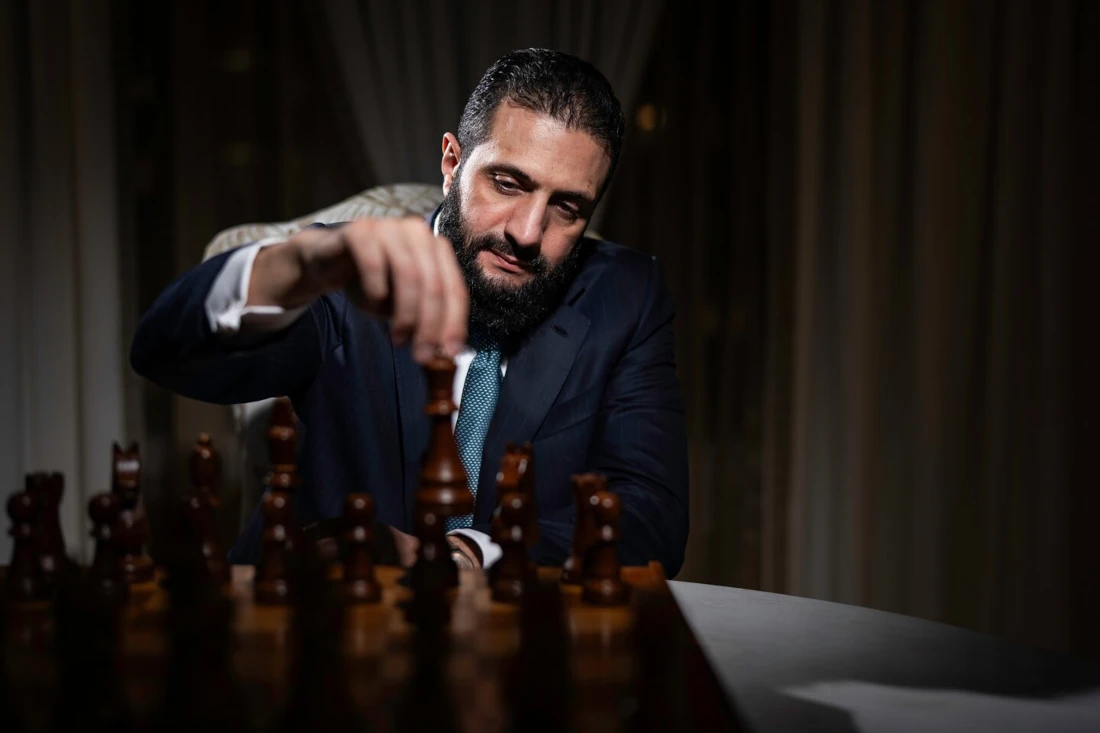
The authorities are moving so quickly that Kapanadze, the former deputy speaker, likened the situation to “speed chess”, with the opposition trying to stave off checkmate while hoping the government makes tactical mistakes in its haste.
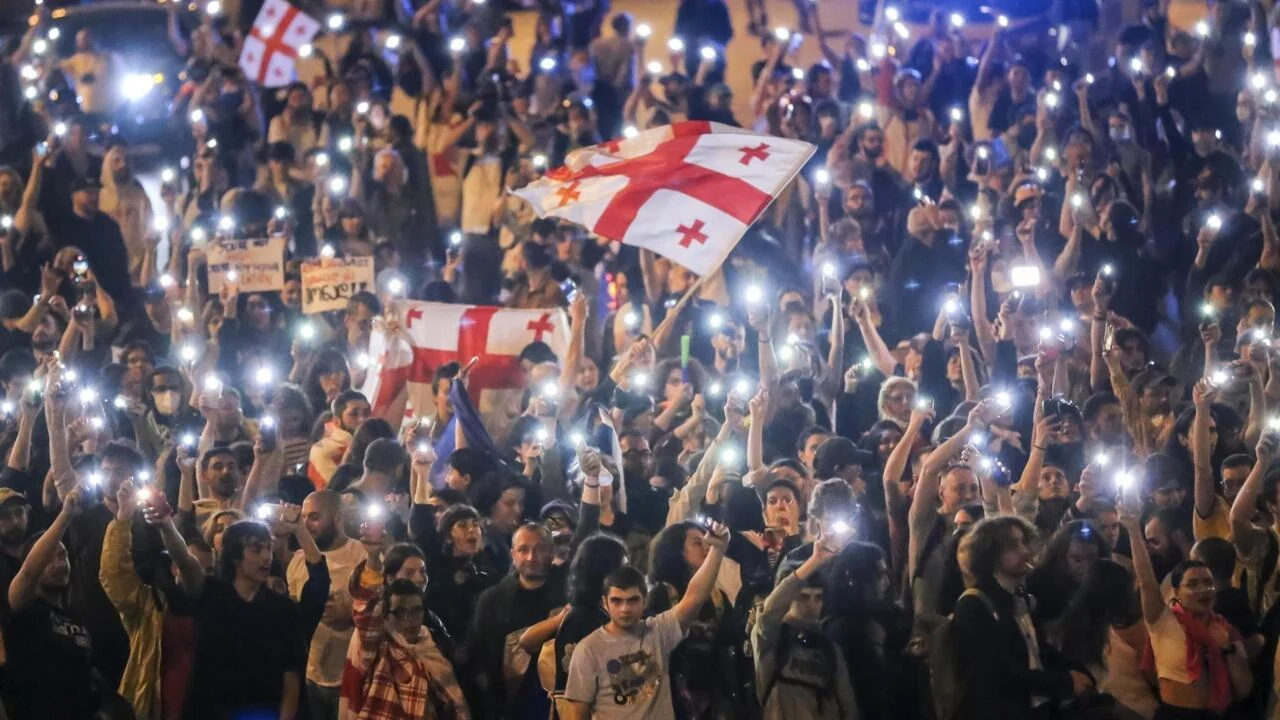
Arrests at nightly anti-government protests outside the parliament keep political activists in states of fear, despair and resignation. Dozens are languishing in jail or have been fined for blocking the road.
“Georgia has just disappeared, from not just the European table, but from the global stage,” said Grigol Gegelia of the Lelo party, which is facing a ban. “We are losing our country.”